The Versus Vault • Comics + Movies • Pick Any Two Fighters Featured matchup — changes every time you open the page
THE VERSUS VAULT

Every hero now gets the researched rundown — origin, comics vs screen versions, powers, feats, gear, healing, weaknesses, contested points and sources. Version policy — comics first: wherever a fighter has something in the comics but not in the films, the Vault leans to the comics — comics powers, feats, gear and limits are the scored default everywhere on this page, and film versions are noted as the lower, narrower screen variant, never the default. The Featured Matchup below is picked at random on every page open — reload and you'll get a different pairing and arena:

SPAWNvsBLADE

The Daywalker is one of the best monster hunters ever put on a page. The problem is simple: Spawn isn't the kind of monster Blade was built to kill. Blade's silver, garlic and UV kit is anti-vampire. Spawn is a Hellspawn made of necroplasm — and that mismatch decides most versions of this fight before the first swing.

SPAWNAl Simmons • Hellspawn • Image Comics — illustration, not official art
VS
BLADEEric Brooks • The Daywalker • Marvel — illustration, not official art

Short answer: In the comics, Spawn wins 8–9 times out of 10 — he out-ranges, out-regenerates and out-magics Blade by tiers. In the movies it's a genuine fight (Spawn roughly 6–7 out of 10) because 1997 movie Spawn can actually die by decapitation, and decapitating things is literally Blade's job. Blade only becomes the favourite when the fight is forced somewhere Spawn loses his powers entirely: the Dead Zone.

Comics vs ComicsSpawn 8–9 / 10
Movies vs MoviesSpawn 6–7 / 10
In the Dead ZoneBlade favoured
God-tier SpawnSpawn 10 / 10
Fan poll (KillerMovies, 16 votes)Spawn 13–3 (81%)
New — full roster: pick any two fighters in the Versus Lab below ↓
01 — The verdict depends on the version

Three fights, three answers

“Who wins?” is meaningless until you say which version of each fighter — and where. This section follows the Featured Matchup above and your Versus Lab pairing: comics versions, screen versions, and one arena twist.

Rendering for the featured pairing
THREE VERSIONS, THREE ANSWERS
Comics • Screen • One arena twist

This grid renders for whichever pairing the Featured Matchup and the Versus Lab are showing — comics versions, screen versions, and the arena that changes everything. Pick any two fighters below and it follows; select the original Spawn vs Blade pairing and it restores the fully researched verdict for that matchup.

These three answers re-render for the pairing above — load the Featured Matchup into the Versus Lab, or pick any two fighters there, and this section follows.

02 — Tale of the tape

What each fighter actually brings

Grounded in Marvel.com for Blade (the primary source here) and Spawn Wiki / CBR / Death Battle profiles for Spawn. Where sources disagree, it's flagged — fan power-scaling numbers conflict a lot.

This section follows your Versus Lab pairing — pick any two fighters below and the tale of the tape, the head-to-head tiers, the four decisive factors and the scenario matrix all re-render for that matchup.

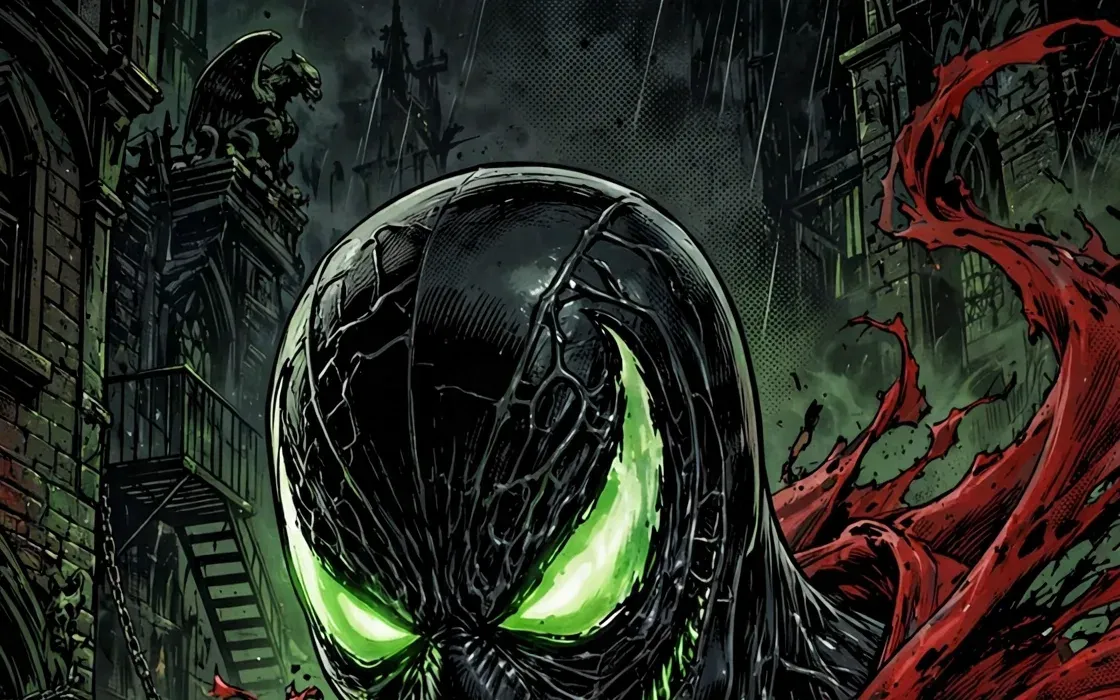
Comic-style illustration of Spawn — black symbiotic suit, glowing green eyes, red cape and chains, green necroplasm in his hands

SPAWN

Hellspawn • Necroplasm

Ex-CIA assassin Al Simmons, murdered, dealt with Hell, returned bonded to the living suit K7-Leetha. His body isn't flesh and blood — it's necroplasm, the substance of Hell itself. That one fact breaks half of Blade's playbook.

  • The suit is the weapon system: chains, spikes, claws and cape with a mind of its own — it reacts on instinct, fast enough to block bullets, and using it doesn't drain his power meter. That's why Spawn fights with suit and guns first, magic second.
  • Magic on tap: necroplasm blasts, flight, teleportation, phasing, invisibility, shapeshifting, telekinesis, matter and soul manipulation, even time manipulation at higher showings.
  • Regeneration: healed instantly from incineration by Anti-Spawn, holes in his chest, broken arms, blown-out kneecaps — and kept fighting after losing his heart.
  • Soldier first: trained assassin who happily uses firearms, rocket launchers and a Brimstone Cannon to conserve magic.
Weaknesses that matter here
  • Necroplasm meter (early/classic only): the famous 9:9:9:9 counter (9,999) drained with every big use of necro-energy; at zero, Hell drags him back permanently. The rule changed after issue #100.
  • Heaven-forged weapons: virtually immortal — except to weapons forged in Heaven and magic, which wound him lastingly (modern Spawn heals even those, just slower).
  • Decapitation — contested by era: old rule, it's the one injury he can't heal. Current CBR position: he can now regrow his head. Any verdict has to pick an era.
  • Dead Zone / Greenworld: powerless and mortal there. His one true off-switch.
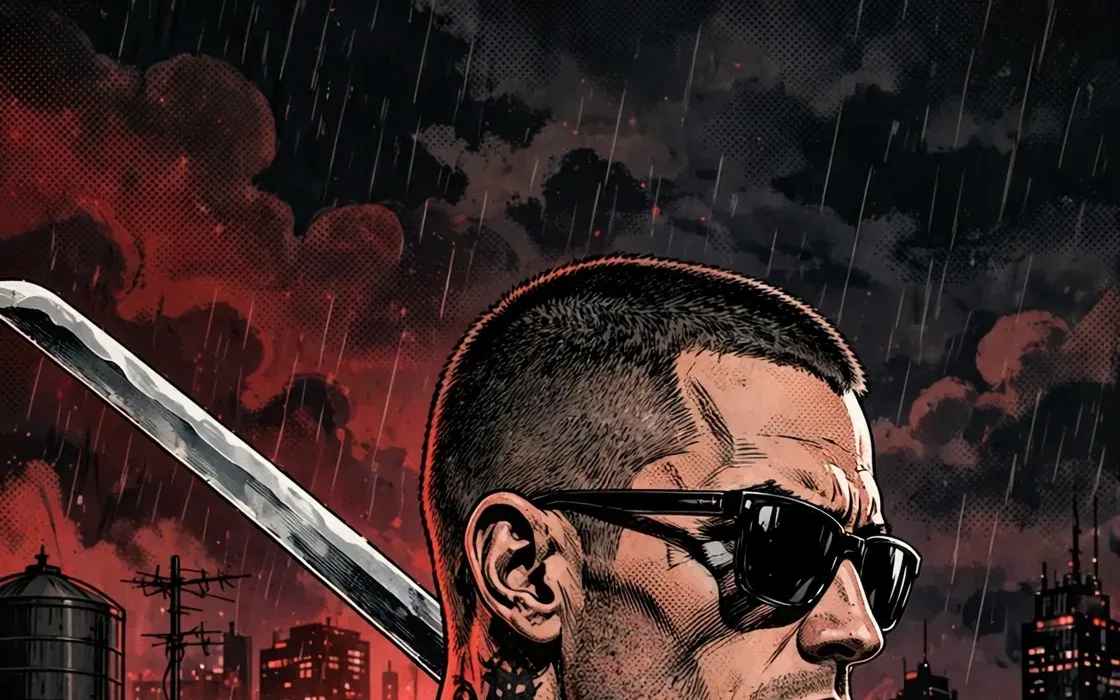
Comic-style illustration of Blade — tactical armor, sunglasses, silver sword over his shoulder on a rainy rooftop

BLADE

Dhampir • Daywalker

Eric Brooks, born in Soho, London — his mother was attacked by Deacon Frost during childbirth, passing vampiric enzymes to the newborn. Debuted in Tomb of Dracula #10 (1973). All of a vampire's strengths, almost none of the weaknesses.

  • Marvel-official strength: lift 1,000 lbs — “a bit weaker than Captain America” (Marvel.com, Jan 2024). Fan sources claim 1 ton, even 6–10 tons — contested, and even 10 tons is nowhere near a building throw.
  • Speed & senses: dodges point-blank gunfire, kept pace with the speedster Spitfire, enhanced smell / night vision, and a sixth sense that detects supernatural presence — he'd clock Spawn as wrong instantly.
  • Durability: survived crashing through buildings, falling from planes, a direct hit from Mjolnir and a punch from a rampaging Hulk (Immortal Hulk #46). Fights for hours — his body makes less lactic acid.
  • The arsenal: master swordsman and martial artist; acid-etched adamantium swords, silver bullets (hollow-point, garlic-filled), stakes, UV weapons, explosives — later the Breathing Gun and Boy-Thing wooden blades.
  • Healing: minor wounds fast; severe ones need blood or serum. Post-Morbius comics summaries claim limb regeneration — film-era summaries deny it. Version-dependent.
Weaknesses that matter here
  • The Thirst: without blood or serum he rapidly weakens, loses control, and will eventually die. The film serum loses effectiveness over time — and it's only about a quarter as strong as blood.
  • He can't feed on Spawn: Spawn has necroplasm, not blood. A long fight starves Blade while Spawn just keeps healing.
  • Not actually weak to his own kit: as a dhampir he's immune to sunlight (only red sunlight can burn or kill him), garlic, silver and holy symbols. Those are his weapons — they just don't transfer to a Hellspawn (see below).
Head-to-head — comics versions, qualitative tiers from the sourced feats above (not official ratings)

Speed is the honest tie: both are bullet-timers and no sourced feat gives either a decisive edge. Fan claims of FTL Spawn or lightspeed Blade are scaling artefacts, not feats — they aren't used here.

03 — Why it plays out this way

The four decisive factors

Showing the decisive factors for the current Versus Lab pairing.

01

Range & flight end the sword fight

Blade has to close to sword range to do anything that matters. Spawn doesn't. Chains strike from tens of metres and multiple angles, the cape fights on its own, and flight plus teleportation mean Blade is chasing a target who chooses the distance. Blade's one edge — being arguably the better pure swordsman — only counts if Spawn agrees to a duel. He won't; he's a soldier.

02

Regeneration vs. the clock

Spawn heals chest holes and incineration in moments. Blade heals minor wounds quickly but needs blood or serum for serious damage — and there's no blood in this fight to drink. Every minute the fight drags on, Blade gets weaker from the Thirst while Spawn stays whole. Time is Spawn's second weapon.

03

Decapitation cuts both ways

Yes, early-era and movie Spawn die if beheaded — and Blade is a practised decapitator (sword, even a silver garrote in the films). But Spawn can deliver the same finish with chains, cape blades and suit spikes, from range, and Blade has no proven way to regrow a head either. If “first clean head shot wins,” Spawn has more ways to land one.

04

Skill doesn't close a tier gap

Both men are elite — ex-CIA assassin vs. decades of single-purpose vampire hunting. In the movie pairing, where their physicals are near-identical, Blade's superior sword craft is exactly why that fight stays close. In the comics, no amount of craft answers teleportation, soul manipulation and a 2.5-mile blast radius.

The big misconception

“Blade's silver sword is holy, so it should shred Spawn.” It isn't, and it doesn't. Spawn's lore weakness is specifically to weapons forged in Heaven. Blade's sword is mortal-forged — silver-plated titanium in the films, adamantium / silver / wood in the comics — a superb sharp object, but with no anti-Hellspawn bonus, and Spawn's cape is described as resistant to Earth weapons generally. Silver, garlic, UV and EDTA are anti-vampire. Spawn is not a vampire. One KillerMovies poster put it bluntly: “Blade is prepared to fight against vampires — Spawn's no vampire.” If a scenario hands Blade a genuine Heaven-forged weapon, the matchup genuinely tightens — but that's a stipulation, not his standard gear, and no canonical Blade story gives him one.

04 — Change the setup, change the winner

Scenario matrix

Every result below follows the same rule: Blade wins only when the fight is forced into a narrow corridor — a mortal, decapitatable Spawn, somewhere or with something that strips his immortality. Widen the corridor and it swings back to Spawn.

Showing the scenario matrix for the current Versus Lab pairing — every arena is re-scored for these two fighters.

ScenarioLikely outcomeWhy
Random encounter, night city — comicsSpawn 8–9/10Night suits both, but range, flight, teleport and regen dominate. Blade has no Heaven-forged weapon.
Random encounter, night city — moviesSpawn 6–7/10Near-parity physicals. Spawn's flight / chains / ectoplasm / invisibility vs. Blade's live decapitation threat.
Daylight, open citySpawn, slightly lessBlade is fully effective in daylight (Daywalker). A fan summary says Spawn weakens without shadows — unconfirmed, and not enough to flip it alone.
In Hell / Hell-adjacentSpawn heavilyNecroplasm's home turf; Spawn travels there freely. Blade brings only his danger sense.
Dead Zone / Heaven domain / GreenworldBlade favouredSpawn is mortal and powerless there. Mortal ex-assassin vs. superhuman dhampir swordsman isn't close.
Blade with prep, standard gearLittle changePrep stocks silver / UV / EDTA — all useless categories here. Prep's real value is researching the Dead Zone.
Blade with prep + Heaven-forged weaponBlade becomes live — possibly favoured (movies)Supplies the one canonical kill condition. He still has to land a decapitation on a flying, teleporting, regenerating target.
Spawn with prepSpawn moreGuns + suit + magic, plus knowing Blade's blood dependence: deny serum, prolong the fight.
God-tier Spawn vs any BladeSpawn 10/10Reality-rewriting tier vs. street level. Not a debate.
Early comics Blade (pre-1999, pre-Morbius bite)Spawn, more decisivelyThat Blade had skill and bite-immunity — no super-strength, speed or healing factor at all.
05 — Pick and choose who's fighting

The Versus Lab — full roster

Roster — 120 fighters. The original 20 — Ghost Rider, Wolverine, Batman, Thor, the Fantastic Four, the Ninja Turtles, and more — plus anti-heroes like Moon Knight, Punisher, Venom, Lobo, and Deathstroke, a deeper DC bench with Superman, Flash, Aquaman, and Green Lantern, and ten villains including Magneto, Doctor Doom, Darkseid, and Thanos.

Then Transformers (Optimus Prime, Megatron), indie heroes like Hellboy and Judge Dredd, more Spider-variants, variant versions like Batman Beyond and Old Man Logan, Spider-Man (Unleashed), twelve more Avengers (Iron Man, Captain America, Scarlet Witch), the Teen Titans, more Justice League, ten Dragon Ball fighters (Goku, Vegeta, Frieza), seven Guardians (Star-Lord, Gamora, Groot), and ten X-Men (Storm, Cyclops, Jean Grey, Rogue).

Dragon Ball note. Scored manga-first, like the comics-first policy. Their top end sits far above most of the roster, and the Vault hasn’t nerfed them — the gap is the finding.

Portraits. Every fighter now shows their full portrait, uncropped — face and weapon included — in the roster, dossiers, breakdowns, and Featured face-off.

How to use it. Tap Fighter A / Fighter B, pick an arena, and run the fight for stats, odds, and play-by-play. Picking a hero loads their full rundown below; “Full rundown” reads one without changing the matchup. All breakdown sections re-render for whoever is selected.

Team Lab. Pick 5 vs 5, load a Featured Teams clash, or roll random dream teams, and run it elimination-style.

How the odds work: Spawn vs Blade pairings keep the researched splits from the breakdown above (Night City 86%, Dead Zone 22%, Hell-adjacent 94% for Spawn, film versions 65%). Every other pairing is scored from the roster's qualitative power tiers below — comics versions as the default under the Vault's comics-first policy (film versions are the lower, narrower variant, scored only in the Movie Night arena), and manga versions as the default for the Dragon Ball fighters under the matching manga-first rule, a simulator estimate for fun, not an official rating or a researched verdict. The Dead Zone still strips hell-linked fighters (Spawn, Ghost Rider) wherever they fight.

Browse the roster — alignment
Publisher — combines with the tab above (pick DC + Villains for DC villains only)

Full fighter rundown — same depth as the Spawn & Blade dossiers • Comics-first policy: the comics version is the scored default; screen versions are the narrower variant • Dragon Ball fighters: manga-first — the manga is the scored default, the anime the noted variant
SPAWNVSBLADE

A 0
B 0
No fights run yet in this pairing
No fights yet. Pick two fighters above and hit “Run 1 fight”.

Mirror matches aren't allowed — picking the same fighter for both slots swaps the other slot to the fighter you just replaced. The deep-researched original pairing — Spawn vs Blade, with its seven classic scenarios (God-tier Spawn, Heaven-forged Blade, early Blade) — lives in the verdict, breakdown and scenario sections at the top of the page whenever that pairing is selected.

06 — Five a side

The Team Lab — pick 5 vs 5

The 1v1 Versus Lab above stays exactly as it was — this is the team game alongside it. Pick any five fighters for each side from the full roster (no duplicates within a team; anyone can face anyone across it). Team odds are not just the five strongest stat lines added up: the model scores combined tiers plus role coverage — a team that fields a tank, a healer, a speedster, a mage, a heavy hitter and a ranged threat earns coverage credit a pile of five bricks doesn't, because the other side has to answer all of it at once. Run the fight and it plays out elimination-style: fighter vs fighter in order, winner stays, loser is out — and the winner carries the wear of the duel into the next one, so a single god-tier pick has to beat five fresh opponents in a row, a little more beaten up each time. That is how a clever lower-tier pick still swings a team fight.

Featured teams — a premade clash, rotating on every open

Featured teams

Team A
VS
Team B

Team A

Team B

Picking a fighter who is already on the same team swaps the two slots — a team never fields the same fighter twice. Mirror picks across the two teams are allowed: anyone can face anyone, including themselves.

Team breakdown — combined tiers + role coverage, the counters, the weak links, and the duel that probably decides it
TEAM AVSTEAM B

Model estimate from combined qualitative tiers + role-coverage credit — not an official rating. The elimination run below is its own dice: wear carries, favourites fall.

Slot 1 vs slot 1. The loser is eliminated; the winner stays on — carrying wear from the duel (closer duels cost more) — and faces the other team's next fresh fighter, in order, until one team is out of fighters.

A 0
B 0
No team fights run yet with these lineups
No team fights yet. Set your two fives above — or load the Featured Teams — and hit “Run 1 team fight”.
07 — Honest limits

What's solid, what's contested

Read this before arguing in the comments:

There is no official crossover verdict for most pairings on this site, and no official Death Battle episode for most of them — where a Death Battle profile exists for a fighter, it comes from that fighter’s own Death Battle matchup, not from a verdict on the pairing you’re looking at here. Publisher pages are the primary sources where they exist; the rest is secondary — fan wikis, CBR, and forums summarising comics, researched 25 Oct 2026 via web index, not panel-checked first-hand. That applies to every hero and character on this site, not just Spawn and Blade.

Genuinely contested points, stated not smoothed over — Blade and Spawn are used here only as examples, not as the only fighters this applies to: Blade’s strength (Marvel-official 1,000 lb vs fan claims up to 6–10 tons), whether modern Spawn can regrow his head, whether Blade can regrow limbs, and whether “mortal weapons can’t hurt Spawn” (pop summaries claim it; the comics show mortal and cyborg foes hurting him, so it isn’t treated as absolute here). Every fighter’s dossier carries its own contested and open questions in the same way.

Version policy — comics over films: across every dossier, stat bar, decisive factor, scenario row, and Versus Lab odd, the comics version is primary. If a fighter has something in the comics that the films dropped or shrank, the comics version is what’s scored, and the film version is the lower, narrower variant — scored only in the Movie Night arena (and in the researched Spawn vs Blade film split).

Dossiers: all 120 fighters carry a researched dossier in the same template as Spawn and Blade — origin, comics version, screen version, powers, top feats, gear, healing, weaknesses, how the version changes a fight, and contested questions — researched 25 Oct 2026 via web index, with sources listed inside each dossier. Confidence is index-level, not panel-checked first-hand.

Their 0–10 tiers are qualitative simulator ratings for this page, not official Marvel/DC/Image/IDW ratings, and fan-estimated tiers (VS Battles, Death Battle, character-stats scaling) are flagged as fan estimates, never official figures. Numbers that conflict across sources — Wolverine’s tonnage, Reed’s stretch range, Peter Parker’s 10 vs 25+ tons, Batman’s 127 martial-arts claim — are stated as conflicts, not smoothed over.

Pairings other than Spawn vs Blade have no official crossover verdict: treat those odds as a structured model estimate, not a researched verdict. Their decisive-factors text and scenario rows are likewise generated from the two fighters’ dossiers and tier lines — a model summary, not additional researched verdicts. When Spawn vs Blade is selected, those sections show the original researched copy verbatim.

Consensus summaries — updated: Winter Soldier, Aquaman, and Green Lantern (Hal Jordan) remain canonical-consensus summaries with a short source list, and each says so in its own dossier. The other thirteen formerly consensus-only dossiers — Catwoman, Shazam, The Crow, Kick-Ass, Captain America, Black Widow, Hawkeye, Ant-Man, Wasp, Vision, Falcon, War Machine, and Hawkgirl — now carry a full Dossier Sources list from follow-up research on 25 Oct 2026, with every source marked live-opened or index-verified. Both identities are covered where the mantle is shared: Ant-Man (Scott Lang / Hank Pym), Wasp (Janet van Dyne / Hope van Dyne), Hawkgirl (Kendra Saunders / Shayera Hol). One caveat is kept: exact single canonical power numbers could not be verified for those thirteen — sources give ranges by era, version, or armour, so the dossiers report ranges, not a single figure.

Dragon Ball dossiers: the ten Dragon Ball fighters carry the same full template, researched via web index with sources inside each dossier, under a manga-first policy mirroring the comics-first rule — the manga is the scored default, and where manga and anime disagree (Ultra Instinct’s trigger, Gohan vs Kefla, Super Saiyan Rage, Cell’s regeneration rule, Black Frieza existing at all) the dossiers say so plainly. Official power levels stop after the Frieza saga (Daizenshuu 7 guidebook figures), so every later Dragon Ball number and every VS Battles tier is a fan estimate and flagged as one. Dragon Ball scaling sits far above most of this roster: the Vault scores that honestly rather than compressing it, which is why Dragon Ball fighters sit at the top of the stat scale and a street-level fighter’s odds against them are near the model’s floor — that is the honest answer, not a glitch.

X-Men dossiers and Team Lab: the ten X-Men carry the same full template, researched via web index with sources inside each dossier. Jean Grey is scored as standard Jean (Omega-level telepath and telekinetic), with the Phoenix Force as the separate cosmic variant her dossier separates out — Dark Phoenix and White Phoenix are story states, not defaults — and Iceman is scored at his demonstrated Omega level, not fan-extrapolated peaks. VS Battles-style tiers there are flagged as fan estimates, never official figures. The Team Lab is a model, not a verdict: team odds combine qualitative tiers with role-coverage credit (tank, healer, speedster, mage/hax, heavy hitter, ranged threat), and the elimination run adds dice plus carry-over wear on each duel’s winner — treat its results like the Versus Lab’s non-researched pairings, as structured entertainment modelling.
Sources